Blog

The usual conditions

Finally, I went sailing with the idea of practicing in stronger breeze. I reconnected with the usual conditions of the San Francisco Coast. Wind was between 15-26 kts during the whole afternoon and soon a thick fog joined us.

Read on for a fun graphical at the end.

Slip those lines!

Getting out of the slip solo proved harder than I thought. There was a constant 12-14 kts wind blowing me into the dock. Changabang has a lot of freeboard, and with the mainsail rigged and ready to hoist to boost, we presented a lof of windage. My first idea was to push the boat hard off the dock, jump on the boat, and power out. Well, that didn’t work. Changabang was now about half way out of her slip and still against the dock. I doubled the stern line to a cleat, and started motoring in reverse. Ever so slowly Changabang started to point up against the wind. More power, a little more. More power still and I am starting to feel good that I may have enough leeway to get out of the slip without dragging along the dock.

Switch to neutral, forward, power up, let go of the dock line. Boom we’re out, powering straight for the boats on the other side of the fairway. Slow down, get the line back in, turn and voilà: “en route pour de nouvelles aventures”!

Hoist them sails

After motoring out of the harbor and into the ocean, it’s time to hoist sails. I’m not sure what the boat can take in the forecast conditions, 20-25 kts from NNW. So the mainsail goes all the way up. Next, since the solent is rigged, it goes up too (while going downwind to depower it). As I start going upwind it becomes quickly clear that the solent is too much for today, at least without using the ballasts, which I don’t plan to use just yet. I want to learn to sail without them first. Who knows, they may be converted to water reservoirs!

So it’s back downwind and the solent goes down. I pick up the old dacron staysail, rig it. Now, it’s quite a process working at the bow with the boat slamming into the waves and sometimes fairly large rollers. So I start using my tether. As I am working at the bow I pick up the upper lifeline for a good handhold and … it lets go! There was a small lashing where there should have been a stainless steel pin, and it broke. So it’s time to look for a bit of dyneema line for a temporary lashing.

Then we’re ready to hoist, which goes just fine (except that later I’ll discover that I had the halyard twisted once on the removable headstay … live and learn!). For today, my work on the halyard repair seems to hold (I sewed a 48 plaits Dyneema chafe sleeve over the chafed cover).

That took a lot of work. About a whole day for one patch!

Yeah, the only way from here is up

I can’t say that anything went wrong. But there’s lots of work to do here. As the afternoon progressed the wind picked up, reefs went up. We were down to 3 reefs in 25 kts. And then the fog kicked in. We made it almost to the San Francisco South Traffic Lane Lighted Bell Buoy, and then turned around. Here are a few findings:

  • Anticipation is key with these boats, especially as the wind goes up. We were getting to the point where the staysail was a little too much. It can be reefed, but how? Drop it to deck level, to leeward, while it’s blowing 30 kts apparent, and the boat is healing 25 degrees and slamming? That’d be interesting.
  • Reefing the mainsail is a process that I feel I have a good handle on, comparatively that is.
  • As the day progressed I started having cramps in biceps, triceps, hands. The physique is not where it needs to be!
  • We were not hitting the polars but we were not doing too bad either. However, as soon as the boat starts slamming it is very important to keep the speed up. There were (too long) moments spent doing 3-5 kts for a while, trying to get back up to speed.
  • Tacking, so easy. Not. The process I have put down only works so so. I have to cross-sheet the jib sheets as the primary winches are also used for the running backstays. So it goes like this. Preparation: cross-sheet active jib sheet to the opposite halyard winch, prepare lazy running backstay, prepare the active backstay for release. Execution: winch up lazy running backstay, hit tack on autopilot, release active running backstay. Clean up: release active jib sheet (the jib is now backwinded) and trim on the opposite side.
  • What’s wrong with the picture above? I shouldn’t be backwinded with my jib. I think the autopilot tacking speed is too fast. That or I need to move the running backstay work upstream (i.e. sail with both on while tacking).
  • Everything is slow, partly because my fitness is not in line with the needs, partly because I’m learning, partly because everything is big and I’m solo. I’ll say it again: anticipation is key. It’s not good being caught with the wrong sail up on these boats.

Check out this quick video on Youtube of us sailing upwind at the beginning of the afternoon.

Back home

I’m now fairly tired, cramping up, and completely wet. I was reminded that sailing off the Pacific Coast often means cold, wet and tired. I won’t say that I had flashbacks of my practice days with Double Espresso but I might as well (there, just did it). Despite the high freeboard of Changabang, water was still finding its way over. So, around 5PM I decided to turn around and sail back home. I had not the energy to do anything special going downwind so we were slow with the staysail and 3 reefs. Of, and we did a jibe. As time passed, I went on to shake the reefs, arriving with a full mainsail. It’s still blowing 15-19 kts, and the idea of docking in those conditions solo starts bothering me.

Almost safe

The saysail goes down, and is secured to the deck. The engine comes alive (yeah!). I must say that, for now, the most troubling thought about Changabang is: what would I do if the engine died and I’m making my entrance into port (or we’re anywhere close to trouble, really: a beach, a rock jetty, other boats). The mainsail goes down. We make our approach to the marina, rig the docking lines and fenders. In the marina itself, the wind is still above 13 kts, gusting 16-18, and it’s actually coming from astern and into the docks. What this means is that when I’ll slow down in the fairway and start backing the boat I’ll be blown fairly quickly into the opposite docks. So I turn into the wind, power up in reverse. Pfew, tragedy averted, we’re looking good. Slowly motoring into my slip, not hitting anything. We’re half way into the slip, idle in reverse, the wind stops us, and we drift into the docks. Quick, jump, grab a line, get organized. The boat is still in idle in reverse. I man handle her into the slip. All is good!

It’s not over until …

The boat is tidy and the sailor is home. It’s getting dark now. Tidy up the dock lines. Stow the solent back into its bag. Secure the staysail as it will stay out for the night. Cover the mainsail. Tidy more loose ends. And it’s 9:45PM when I get home. A good day, a very good day! I was so tired, I couldn’t sleep that night!

Here’s another video of the afternoon.

Don’t look!

Everywhere I look there’s something wrong. It’s fairly obvious that I am not likely to leave with a boat that is perfect; the money is not there for that. I hope that we will be ready enough. And then it will be up to the “spinning wheel”.

Which one will it be? And what’s that thing up on top? Doesn’t look like a cherry to me.

News?

Not much really, as you would expect. The progress is slow, the learning slower. Here are a few things I can share:

  • A bunch of small stuff purchased (e.g. winch handles, cable ties, tools, etc);
  • The on board pharmacy was all expired so I’m due for a complete new set;
  • Repairs were made to some of the old sails; in fact, I’d like to put the old mainsail in place, but that’s at least a 2 persons job;
  • I thought I had fixed the code 0 halyard, but when I tried to use it, I had the same problem; I have tried to fix it again today;
  • I have brought the staysail halyard home as it needs repair; in fact, it looks like all headsail halyards will need repair (chafe damage);
  • The anti-fouling paint has no anti-fouling properties at all; I think I’ll try to schedule a bottom job;
  • I’ve bought a 10×6 drain tarp (to catch water), a manual desalinator and a filtering water bottle;
  • I’ve fiddled with some of the wiring and removed the old Inmarsat mini-C system (listed on eBay);
  • It’s time to go sailing again!
Just a concept for now …

No picture for this mess!

Well, I had big plans but things turned out differently. Forecast looked good for having an overnight fun trip, light winds today, building up tomorrow. I drove to CaB, spent more time doing small jobs, and finally mustered enough energy to get going. Pushing CaB off the docks and casting off solo worked just fine. We motored out, hoisted the big mainsail, and turned off the engine. The plan for the day was to try the Code 0. There is no trying, only doing, says the tiny one.
The Code 0 came out of the bag, the tack went to the furler, the head to the halyard, and sheets to the clew. And that’s where things stopped working cleanly. Twists in lines caused all sorts of mess:
1. When I pulled the tack to the end of the bowsprit I noticed that the tack line was getting all twisted on its own. Also the furler had been rigged incorrectly and the exit was facing forward instead of aft. Oh well …
2. Next I hoisted the sail. More twists went up the halyard as I hoisted the sail but I did not notice.
3. I unfurled the sail, turned a bit downwind and we took off. Ah, the fun of this boat picking up speed!
Now I was left with the obvious problem that I was going South, that the wind was going to pick up, and that I wasn’t sure what to do with the sail now. It looked like I was not going to be able to furl it back. So I spent some time riding the tip of the bowsprit and ultimately was able to roll the sail up.
It’s now that things really got problematic. I tried to douse the sail by easing the halyard, and it wouldn’t come down.
I decided to turn around and head for port. Someone was going to have to go up the mast and figure out what was going on.
Lucky me, before leaving, I came across Michael LG, with whom I worked in the past. As I was motoring back, I hit him on LinkedIn asking for his help to get me up the mast. And he gracefully accepted! He saved the day really! I couldn’t let the sail up with the expected wind on the forecast.
So up the mast again, only to discover that because of tons of twist in the halyard, it was wrapped around itself (the code 0 is on a 2:1 halyard). And the friction in those wraps was enough to prevent the sail from coming down! I eased the sail down, spent another several hours getting the boat back in order, and finally drove home.
A long day …
If anyone knows of a way to remove twists from a 2:1 halyard without taking it out … let me know …

10 days later

It was only 10 days ago that we made landfall in Half Moon Bay. It feels like such a long time ago. Here are a few updates about what got done after 6 trips to the boat. We’re writing the first chapters of volume II of Changabang’s new life, and it’s a little boring I gotta say!

Changabang’s mast.

A solid mast

After his return from Turkey I was able to check in with Sebastien AUBRUN of PRO-FIL Composites. He built the carbon mast of Changabang. He shared that the mast was designed for the high seas, with an intention for performance but without any compromise for reliability and longevity. Wearable hardware was reduced as much as possible. And it’s painted in white, which makes visual inspection for stress damage much easier. So that’s all good news.

We moved

We originally settled in slip G44 in Pillar Point Harbor, which was on the commercial side. I had been offered a slip on the recreational side but was originally not keen to change. That’s because I must admit that the commercial side feels much cleaner/nicer than the recreational side of the harbor. But after chatting with a few locals I was strongly advised to move because that other slip is a downwind slip; and with strong westerlies/northerlies blowing 75% of the time in the area, it would be much easier to come in and dock alone.

So I moved today and indeed, although the slip is a little tight, I was able to dock alone. Well, to be specific, I was so eager to move during a small lull between rain showers and wind gusts that I overlooked many things: forgot to disconnect shore power before starting the engine; started the engine in forward gear; forgot to set docking lines on the (new) dock side; stepped off the boat with the engine still in reverse. None of this had major consequences. Just a solid reminder to plan, not rush!

Big empty and big clean up

It took 3 trips to empty the boat of everything. And it took 3 days to deep clean her inside. That’s done and I am really happy that’s behind me. Now begins a slow process of moving stuff back into Changabang. I’m quite overwhelmed with the list of jobs. The past week has been seriously draining. I am longing to set the sails again and practice the good stuff.

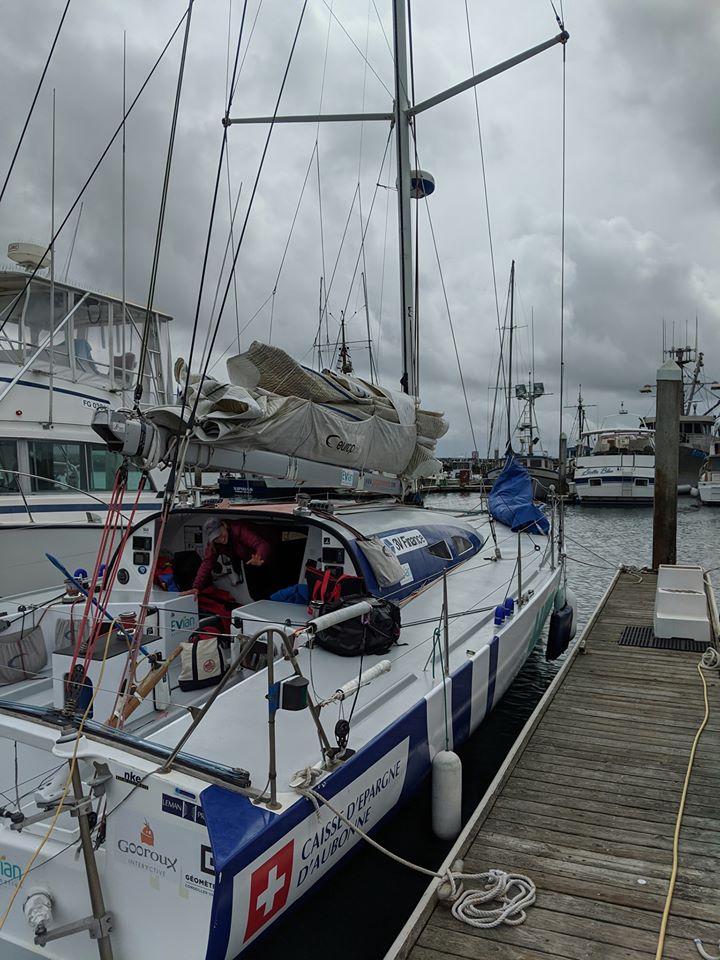
She looks good in orange!

Sails arsenal

This is not exactly a strong point of Changabang. There are 3 recent sails that were built in 2018 and saw quite a good amount of usage already: mainsail, reefable genoa, staysail. Then there’s an old mainsail, a trashed solent, an old staysail. There are 3 storm sails: a trysail, a storm jib, a smaller storm jib. And last we have 4 free flying headsails: a masthead spinnaker, a fractional spinnaler, a gennaker, a code 0.

Not many lines here …

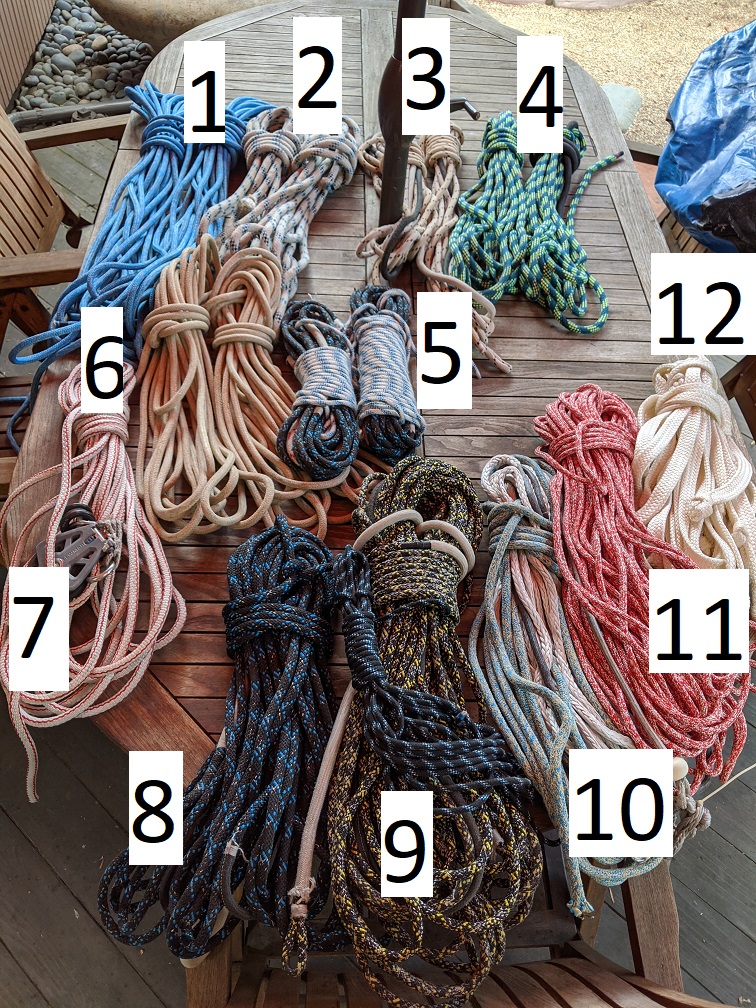
Lines poor

Similarly, Changabang’s stash of lines is fairly poor and dated. I’m not even sure which one is which! There is plenty of an old sort of lines, somehow twisted on its own.

CaB’s anchoring gear.

Heavy stuff

I cleaned (somewhat) the anchoring gear too. The heavy anchoring gear is stashed in the aft compartment, and it’s a battle to lift it out of the tiny cubby it’s stored in! I had to purchase a couple bits of hardware to complete the light anchoring gear setup. Both are back on the boat; and I pray to not to have to use the heavy anchoring gear! Since we’re talking buying; I’ve got a dehumidifier and a small fan underway, to keep mold at bay. And now, I’ll also need another shore power adapter as the recreational side of Pillar Point Harbor runs on 50A.

I also discovered a home made sea anchor aboard Changabang. Similarly, I hope to never have to deploy it. It’s good to know there’s one though!

And that’s not all … CaB’s gear is all over the house!

Great progress, what’s next?

I’m glad you asked:

  • Reseal the stern hatch and re-secure the life raft in there;
  • Adapt to 50A shore power;
  • Repair engine throttle (may require a complete new kit);
  • Fix port backstay clutch;
  • Fix forward hatch leaking handle;
  • Cross-check all battcars ball bearings;
  • Repair all sail damage;
  • Fix aft ballast scoop leak;
  • Install a new Windex wind vane;
  • Organize boat paperwork;
  • On the electronics side: review everything and identify why NKE pilot is/was not working (that in itself may end up being a couple of weeks of work);
  • Clean, triage, sort, package and re-load all the boat’s gear.

And then there are a few required upgrades:

  • Install solar panels;
  • Install hydro-generators;
  • Continue investigating the feasibility of an emergency rudder;
  • Install messenger lines up the masthead;
  • Figure out water storage, catchment and manual desalinator;
  • Replace sat comms with Iridium GO;
  • And of course all that I don’t know yet …

When do we go sailing?

Maybe next week? This weekend?

Oh, I forgot to say: on AIS, we’re now “CHANGABANG SOLOSAILR”.

A fast trip up the US West Coast

On our way from San Diego to Channel Islands Harbor we burned a full tank of diesel. So when we left Channel Islands Harbor we had a full tank and 3 jerry cans loaded with diesel. We needed only half of that to get to Pillar Point Harbor in Half Moon Bay, and some of that was for charging. Once again the usual “if you plan for it you won’t need it” happened, which is a good thing. Other unplanned for events happened too, which were not as good. Read on.

Unexpected crew saves the day!

Making plans

We arrived in Channels Islands Harbor Wednesday morning. Lee had family affairs to attend to, and Rob had similar business to cater to. I had the day to myself to tend to small jobs on the boat, and to start thinking about the next leg. My neighbor in the harbor, Ollie, was very friendly and invited me for dinner a couple of times (and to sleep with them as well, but I wanted to start to know Changabang so I slept in my bunk).

The forecast looked good for a departure Friday (as discussed with Robert M.) but I would have to do it alone, which is something I was warming up to but had several concerns about. Faith had it differently as a Facebook post alerted Kathi of my presence on her sailing grounds. Kathi and I go back to our Clipper days. We met up and talked about good old days Thursday evening, then decided to have breakfast together Friday morning. One thing led to another, and she was signed up to sail with Changabang on the trip to her new home, about 285 nautical miles.

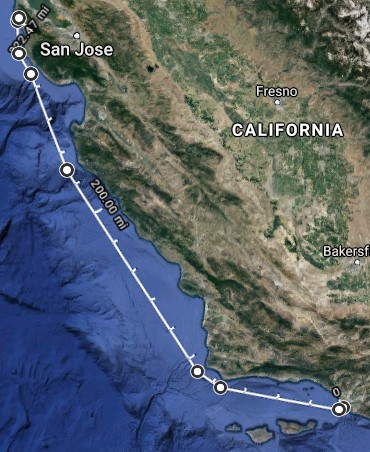
285 NM going North

Best sailing ever

After loading gear, food, water and fuel, we motored easily out of the harbor to the oil rig Gina, where we made our first turn for Point Concepcion. Wind was forecast to always be behind the beam and maxing out at 20 kts (with most models showing less than that). This is unusual as most often sailing up North means beating in strong Westerlies/Northerlies.

Dolphins escorted us for a long while, possibly helping us avoid hitting a whale?

From there we sailed and motor sailed every time boat speed was dropping below 5 kts. Saturday was a wonderful day with lots of wildlife (dolphins, whales, birds). Wind was variable but most often between 8-13 kts. As evening approached wind started to increase and, after unseamanlike hesitation from the skipper, we dropped to one reef and geared the genoa down to the staysail. Models were still showing good wind behind the beam below 20 kts.

Very smooth sailing.

Bang as in Changabang

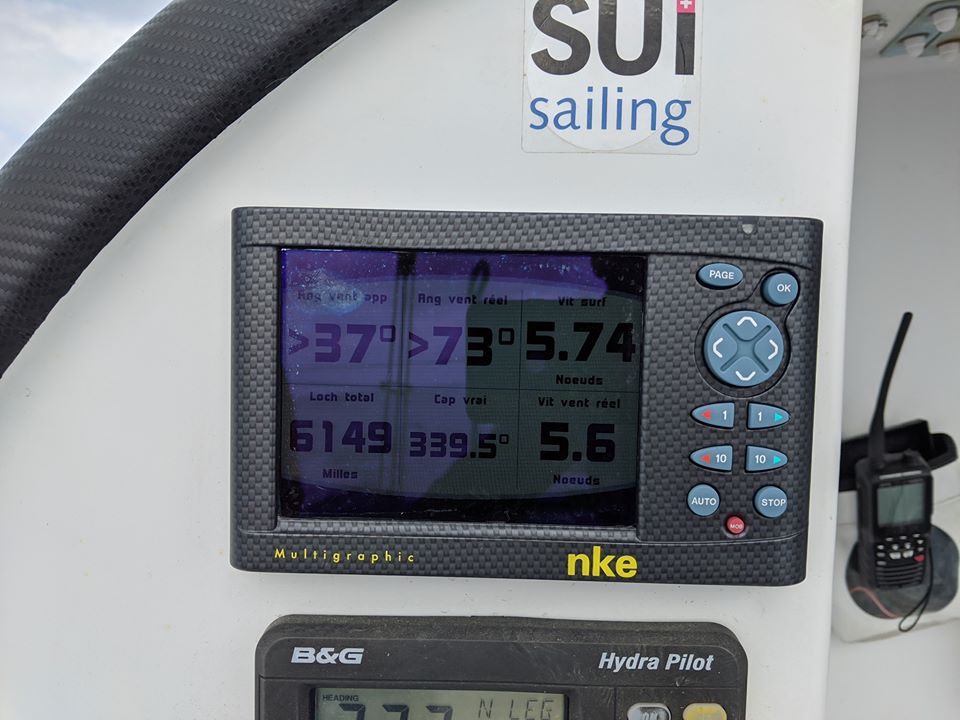
The night proved all models wrong and it also proved that CaB is a very seaworthy sailboat. Wind started piping up to 20 kts, then 24 kts then fluctuating between 24-28 kts, with gusts above 30 (max I saw was 33). We dropped to the second reef and kept going with boat speed between 8-12 kts, most likely dragging plenty of kelp along. As the wind angle clocked between 120 to 70 of port, Changabang remained mostly flat and was skimming on the big sea. It was amazing how it was; a flying carpet is what I thought of. The old B&G autopilot was handling just fine so Kathi and I remained inside, cozy in our bunks. We experienced the classic videos from the Vendee Globe with water gurgling over the coach roof, as we crossed swell and wind waves. This continued unabated for the night and as we approached Pillar Point we were still seeing 20-25 kts.

Where does trouble happen?

We had had a wonderful and fast ride. Changabang showed she likes offshore sailing. Now it was time to make landfall, and as most sailors know, land can be trouble for boats. We started preparing the boat for landfall, dropping to 3rd reef. We started the engine, pushed it into gear, throttled up and … Nothing happened. The throttle cable was not working. Changabang is not a boat to make landfall under sail in a small craft harbor! Certainly not with a skipper who doesn’t know her well. Her turning radius is very wide too.

A line to the throttle lever kept in place with a bungee cord.

From then on it was very much a case of a cascading series of problems, including a few hail calls from a concerned harbor patrol. I fiddled with the cable and got nowhere. I thought to heave to and that caused all sorts of troubles, with the autopilot somehow getting stuck in tack mode. We tried to take the mainsail down (I was hoping that the idle would be enough), only to have top battens entangled in the lazy jack and the running back. Throughout all of that I was picturing Changabang on the beach and funny newspaper articles! I got a little cranky and Kathi took the brunt of it (of which I am not proud). Finally we got things sorted out and were sailing South under staysail alone. I made a call to Skip, whom among other things suggested to jerry rig a line to the throttle lever on the engine.

MacGyver to the rescue

Safely docked.

After going through the trouble of jerry rigging that line, we decided to make our approach to Pillar Point. So I get the engine in forward, push the throttle and, oh miracle, it starts working!?!? I’ll skip through the bit of troubles we had docking, only to say that in the end, all is well that is well.

The trip was by far one of my best sailing experiences. It was fun to be along with Kathi; Changabang handled like a dream (with boat speed well below polars; much to learn still); wildlife experiences were everywhere. And best of all it only took us a day and half to get home. Brilliant!

What’s next?

Well, there’s plenty to do. I’ve started emptying the boat to deep clean her. The job list grows; and we have much to add. So keep on following us for future updates, including pictures and funny videos.

Project Changabang: end of Volume I

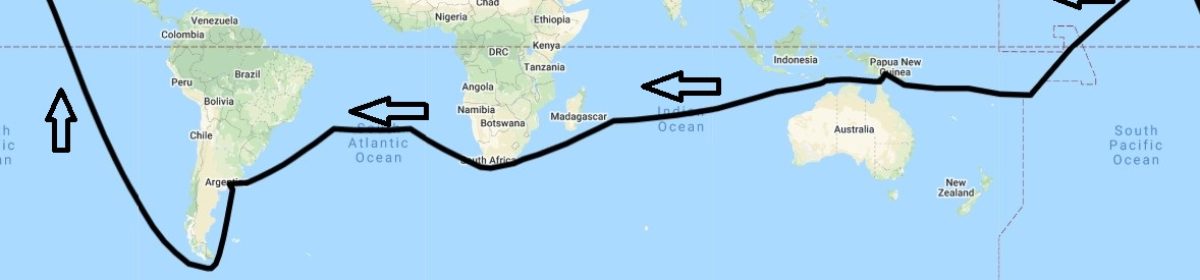
If this adventure was a book, we’d have a few chapters under our belt already, maybe in this order: I Genesis, II Research, III Finding a vessel, IV Buying Changabang, V Shipping Changabang to the Pacific.

Making contact

Last Friday we took possession of Changabang in the Port of San Diego. It was a long night. I had arrived the day before and met with Lee to reconnect after the 2018 SHTP and discuss the next days. I’ll admit that I was anxious and may not have been the friendliest guest. With the very little information that we had received about the discharge of Changabang we started making plans. Lee would drop my at the terminal gates and would go back to his boat Morning Star to motor down to the port terminal. Lee was going to rally help from his buddy Captain Chuck.

As Star Lima made her entry in San Diego Bay we had been told by SSA Marine to show up at 5pm. I hired an escort service to be escorted from the Port terminal gate to Star Lima, where we waited for Customs to release the ship. At around 6pm we (me and another hired skipper) were allowed access to our cargo. With trepidation I went over to Changabang and was quickly reassured that the loading in Antwerp and been done really well. The deck and everything was filthy and covered with a sticky, brown grime. Luckily the batteries looked like they would have enough charge to start the engine.

Waiting game

During this little inspection, stevedores had started unloading containers. Next they prepared the catamaran to be offloaded. In a way it was good that we were second as it gave us an opportunity to see how things would unfold. Now it’s 10:15pm and the stevedores go to lunch, with a planned return time of midnight! I had been outside in the cool wind for over 5 hours now and decided to as the crew of Star Lima if I could wait inside. They were very friendly and even treated me to pizza, a drink and a charger for my phone!

Midnight rang and the stevedores started working on Changabang. Because San Diego is a small port they don’t have as good equipment as would have been preferred. It felt like they were basically singing it and interfered many times when things were going in the wrong direction.

Welcome to the Pacific

Finally Changabang was in the sling and I was sent to the docks to find a ladder along the concrete to board Morning Star. We did just that; Lee motored slowly close enough for me to grab his shrouds and step aboard. Next we motored slowly to Changabang to put aboard. After a few interesting maneuvers Lee backed into Changabang’s bow, where I was able to grab the headstay and switch boat.

My mission was then to start the engine and depart, which I did. The Volvo Penta started within 10 seconds, without glowing the injection chambers (I had not seen the button, silly me!). But Changabang was not fully in the water and when I was look for exhaust water there wasn’t any. A little overly excited I yelled at the stevedores, now standing high on Star Lima (4 story building), to further drop the boat in the water. Finally, we had water coming out.

Now it was time to release Changabang from her slings and move on. I knew of a problem with gear shift lever and of course as soon as we were free from the slings, I couldn’t engage forward gear. Thanks to the previous owner’s instructions I knew how to fix this but now Changabang was drifting towards Star Lima’s hull. I threw a line to Lee who was standing by and we were off on a slow tow. A few minutes later I was in gear and released the towing line! Boom: Changabang is sailing in the Pacific!

The next day

It was past 3:30am when we were docked at the SGYC and headed for hotel Morning Star for a well deserved rest.

Saturday morning Lee and I did good work of cleaning Changabang and making her look nice again, just in time as she started to attract interested visitors. Unfortunately, as we really wanted to leave Monday/Tuesday, it was necessary to limit conversations. Saturday evening, Lee had arranged for an informal presentation of this adventure. That’s when I was able to share more about my intentions with SGYC members. The club was very welcoming and kind, and a good night was had for all.

Rob joins the party

Sunday Rob joined and added great energy and experience to the preparation team. We did quite a few things: cleaning of course (5 hours on my knees scrubbing), reset the bowsprit, reset the lazy Jack’s, reset the mainsail, repair a cam cleat, fix a batt car (missing ball bearings), a good engine check, adjust shore power plugs and charge batteries (we think that they’re healthy!), tape the spare battens, fix a deck level nav light, provision, refuel, and more small jobs, which continued unabated until Monday evening.

En route!

Tuesday morning we felt ready to depart and the weather was cooperating. So we did!

We motored out of the San Diego channel. As we exited the channel, we hoisted the mainsail to the third reef and sailed like that for a while, with the wind astern, between 13-18 kts. When I was ready for it we went to the second reef. Then again later we went to the first reef. It was a full moon. Crew was great, we hoisted the Genoa as wind was dwindling down. And finally the engine came back live.

First landfall

I’ll skip through the rest of the day only to say that we made a safe landfall in Channel Islands Harbor, where a friendly slip was awaiting Changabang. It was really perfect to have Lee and Rob aboard for this first trip.

Lee returned to his home and Rob did as much. I slept on Changabang. I’d be omitting an important part of this story if I was not talking about Ollie, who’s right next to me. He’s an sailor with tons of miles under his belt, including racing boats like Changabang and work for JP Mouligne and Cray Valley. He and his wife were super friendly, invited me for dinner (which I obliged) and for a sleep on their super comfortable Morgan boat (which I did not). In fact, I have been invited again!

Thursday work

Today I did small jobs again: did a bit of shopping at West Marine, replaced worn out shock cords on decka, addes missing spinnaker sheet retrieving line, replaced third reef tack block, replaced chafed handhold lines inside, re-adjusted lazy jacks.

As the day progresses one of my buddies from the Clipper race picked on my Facebook post and showed up to reconnect and see the boat. I really liked my time with Kathi during the Clipper training. She’s so much fun to be around. As we brought up the subject of bread, she came back with a baguette! I love boating, such a great community.

Change of plans?

One thing I learned from Skip today is that there is now a record to beat:

“Here’s one for the record books and for PJ to challenge: The World Sailing Speed Record Council has just confirmed a record time for sailing solo around the world westabout in a 40-foot boat. The elapsed time of 258 days, 22 hours, 24 minutes, an average speed of 3.48 knots, was set from June 2019 to February 2020 by Bill Hatfield sailing Brisbane, Australia and return via the Canary Islands and Cape Horn on his Northshore 38 L’EAU COMMOTION. It was Hatfield’s 3rd attempt.

Bill lived on strict rations at sea. “For fresh water I had a desalinator, and my daily diet was a third of a tin of beans, a tin of tuna, 100 grams of rice and flour and oats, and 150 grams of milk powder.”

Bill Hatfield is 81. At one point he fell overboard without a tether. But managed to grab the toe rail, work his way aft, and climb back aboard using his water generator as a foot step.”

Good! It means that now I know it’s possible!

Friday departure?

I’m considering departing from Channel Islands Harbor tomorrow. I’ll look at the forecasts tomorrow again. It could be a bit of a stretch as a second sail to go solo. I need to think this through.

I’ll post this now and will follow up with another post with decisions, maybe.

Home stretch!

MV STAR LIMA is only a few days away from San Diego now. After checking with San Diego port operations it is likely that Changabang will be discharged this Friday (with a small probability for Thursday evening). I’m driving down Thursday, picking Rob T along the way, then meeting with Lee J, who’s graciously offered his hospitality and more in San Diego. We may be hosted by the Silver Gate Yacht Club while we get ready for the trip to Half Moon Bay’s Pillar Point Harbor. I’m both excited and anxious!

D-12?

A small update for today.

The shipping folks told me March 6th. The San Diego port arrival list says March 7th. SV Star Lima, carrying Changabang, is due in the Mexican port of Mazatlan on February 26th. I’m still without information about how things will proceed in San Diego. So, let’s call it D-12. To get to San Diego, my plan will likely be to rent a car one way so I can pick up Rob T along the way and carry all that I need to take with me.

I know I said last time that my paper charts were all ready to go but that may have been a small lie as I wanted to have container for it all. It probably sounds like I’m belaboring this point; the reason is simple. It’s really the first item I’ve been able to check off “the list”. So here goes:

Paper charts all neatly bagged.
Verified by MonsterInsights