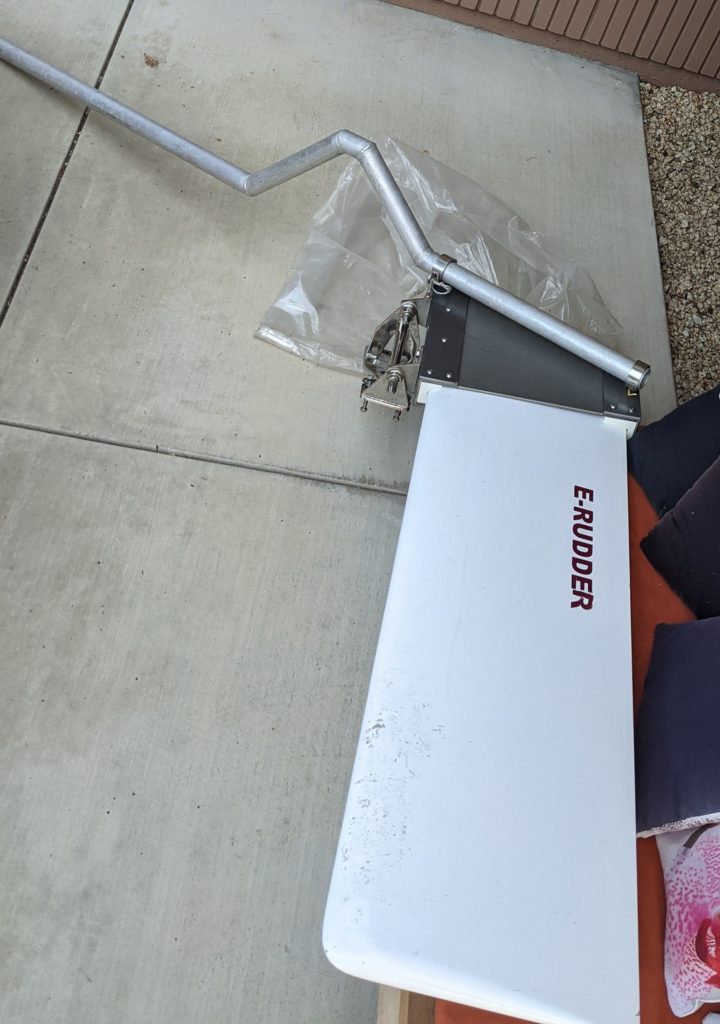
I drove to Ventura to pick up an emergency rudder (thank you, generous donator!);
I did a kindergarden project (fabricated a cover for the NKE display using cardboard and tape);
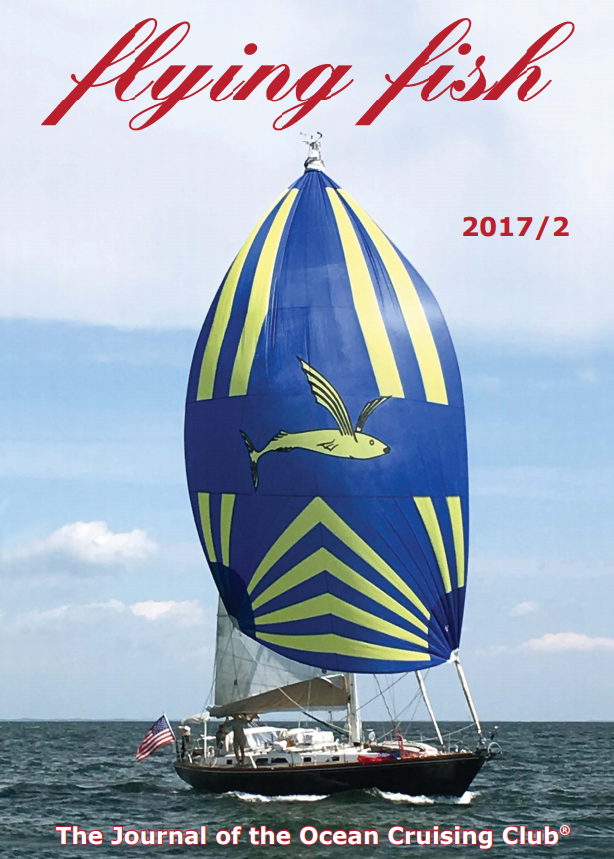
I’m in talks with Bill to acquire an almost new spinnaker that’s branded with the OCC flying fish! I’m so stoked at the idea of flying the fish again!
I love it, so beautiful!
E-rudder transom bracket
Now that I have the e-rudder I need to figure out a way to attach it to Changabang’s transom. If you have suggestions I’m all ears. My thinking goes along these options:
Fabricate a bracket and not install it at all: if I need to deploy it I’d drill holes in the sugar scoop transom, put some backing plates, and affix the bracket.
Fabricate a bracket and have it fiberglassed in: I’d need to find another specialist as I don’t think that the one who did the job for the hydrogenerator brackets will be interested;
Last option, which I don’t really entertain, is to re-use the hydrogenerator brackets. I don’t think the base is wide enough to spread the load.
If I have to deploy the e-rudder because one of the rudders was damaged, it is possible that the stubby may be enough to steer with the e-rudder just doing the job of a centerboard. Who knows? It’d be interesting to test.
What’s next? Testing the gennaker to verify the repair, testing the B&G auto-pilot to verify the repair, doing a few maintenance chores with the boat’s navigation lights, and more …
Today I re-installed the secondary autopilot. First, it was the usual struggle to secure the eight bolts. Next, it was a matter of making the electrical connections, which was followed by a quick test using the B&G electronics. Finally, I put a bit of sealant around the boot where the rod exits to brave the elements. I will need to do a final sea trial to confirm that all is good when the sealant has cured.
I took a few measurements and will need to do more so I can submit the request for a new PHRF certificate.
Finally, I scrubbed the waterline and the rudders clean of the green growth that’s so quick to show off in this marina. I noticed barnacles on the propeller blades, where Propspeed was supposed to keep growth away. I also checked (touch as visibility isn’t great) the hull to keel joint repair we did last August and that seems to be holding up nicely I think.
Friday I dropped Genny the gennaker at Leading Edge Sails. As I wrote last time I’m really concerned that a lot of my sails are growing old. I’m very reluctant to put more money into sails … Considering what’s I’m trying to do it’s more important that I but spare requirement equipment for the electronics, autopilots, and hydrogenerators.
I’m back into reading sailing stories to feed the dream.
Sailing inventory
Mainsails:
The “original” Dacron, old and great for what I’m doing, until it blows apart.
The racer: new in 2018, almost $20,000, it’s in the attic, away from abuse I hope. It’s my spare.
Headsails, hank on (soft shackles):
J2: racing sail, new in 2018, $9,000. Used everytime I go out as I don’t have a backup, always on deck in her bag.
Staysail: the original Dacron, always on deck in her bag.
Spinnaker staysail: personally I’ve never used it. I don’t know its history.
Furling sails:
Code 0: fractional halyard, small and old, for deeper angles.
Code 0: masthead halyard, blown out hand me down from California Condor.
Jib top: masthead halyard, in good condition, hand me down too.
Gennaker: I’m guessing 10-15 years old, still works though. In repair.
Spinnakers, asymmetrical:
A2: old, severely damaged and then repaired, nice new ATN sock.
A1.5: old, blown out, lots of repairs, old sock.
Storm sails: trysail, small storm job, large storm jib.
Il faut des jambes! Sunday I had planned to re-install the secondary auto-pilot and test it. But when I got started I realized I had forgotten four bolts. And so instead Todd and I went sailing. It was another light wind day. We set out Richie and went up north towards San Francisco. Around 1:30 PM we turned around, snuffing the spinnaker in the sock, gybing, and re-hoisting on the other tack. We then dropped the spinnaker in favor of the J2 until we rounded the outside green buoy. We were really slow then and re-hoisted the A1.5 for a while. Finally, we decided to turn the engine on to make the last few miles home.
As we were out I also engaged each hydrogenerator to make them work a little. The shaft seal has been known to dry so a bit of action will go a long way in preserving the seal, or so I hope.
Slow sailing with the A1.5
Old!
At the beginning of our outing, we furled out the gennaker. I hadn’t used it since the last few days of my return. As I inspected the sail I noticed a tear at the luff, a couple of feet long. So Genny will have to meet with Joe, again, for a repair.
I’m growing really concerned that all my sails are old and tired. As you can see in the above video, Richie is blown out and has had some serious repairs done to it. So is Big, and now Genny. I hope that, in exchange for their old age, they’ll share their ocean and wind wisdom with me! After giving some thoughts about my sailing inventory, I have realized that the one sail I need to prioritize is the J2. I only have one, and it would be very wise to have another one. After the mainsail, the J2 is the next most important sail on the boat.
Not forgotten after all
When we were done, I checked my bag, and what did I find in there? Four bolts! At that point, after putting the boat away, I was not about to re-install the AP, so it’ll be for another day.
Following up on last weekend’s work on the autopilot, I ordered a replacement clutch, which I installed today. I think that the autopilot is now ready for action. The next step is to reinstall it aboard Changabang.
The engine always relied on in difficult moments
Last Thursday a mobile mechanic came over to service the diesel engine:
Engine oil & oil filter
Sail drive oil change
New impeller
New belt
Fuel primary and secondary filters
Installed a fuel bulb between the fuel tank and primary filter to help bleed air out
Rigging inspection
More maintenance
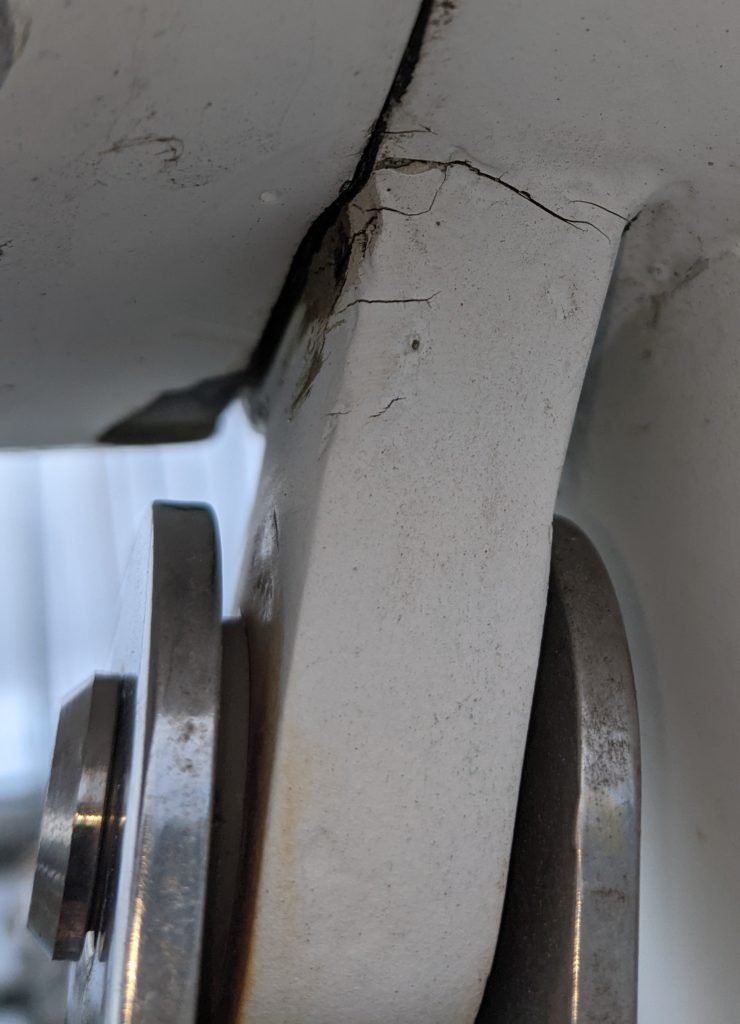
Saturday I met with Alex to go sailing. The forecast called for light winds so we did a few maintenance tasks. First, we tested the water ballast pump, which took a little time as it was running dry. After a while, I managed to get it going again. I now have a saltwater, high flow pump! There are still some light leaks, including the usual at the scoop. Next, Alex winched me up the mast for a rigging inspection. To my untrained eye, everything looked good. There’s one area that I’m not sure about: it could be cracked paint or … I do think that this is heritage and has been so for a while as the tang doesn’t appear to be perfectly aligned with the wire.
Port D1 tang
Sailing
After all that, we pushed off and motored into Half Moon Bay, where winds in the 5 kts greeted us. We hoisted the mainsail and the solent. Then we hoisted the code 0 I received from California Condor. As we were sailing I was looking at the boat’s polars, and to my dismay, we were doing speed in the 4.5-5.5 kts range, when we should be doing 7+ kts! Argh, I really don’t know what to do: the only explanation is that I’m not flying the right sail for that wind range. We had a picnic aboard and then hoisted the A1.5, which greeted us to similar conclusions: slow I am. Bang that, instead, we proudly named the A1.5 “Richie”, coz’, you know, it’s a somewhat reeching kite. Indeed we were sometimes sailing at 70 AWA. Richie then joins Big, and they both have battle scars all over them.
Finally, we turned in for the day, not without talking of possibly signing up for OYRA races.
Saturday, Todd and I went out on CaB for a bit of spinnaker work. The winds were in the 10-20 kts range for the day and the swell stayed comfortable at 4-6 feet. As we made our way out of Pillar Point Harbor we hoisted the jib and sailed West for a bit. Then we pointed towards Santa Cruz and hoisted the A2. Everything went smoothly with the ATN sock. We traced our path back North so we could do another spinnaker run. This time we were going to hoist the A1.5 (a gift from California Condor). We set up for a hoist and then let the sock go up. But things got a little sideways. The sock dousing line bunched up inside the sock; then there was too much pressure with the A1.5 opening up and we lost the dousing line. It got stuck up the first spreader. Dang!
Coming back from a little jaunt up the mast.
We could have considered a letterbox takedown but it looked like a great opportunity to go up the mast while underway. The sea was fairly tame and I didn’t have to go high. So, up I went. I don’t think I got bruised up much. But I did struggle holding on and avoiding being thrown on the shrouds. I retrieved the line and we were good to go! After that, we tried to see how much the A1.5 can reach: at 20 kts 90 AWA we broached, so now we know.
Very short! Line caught on the spreader visible here.
After that it took us a little while to return to the marina, put things in order and drive back home. I’m so grateful for Todd’s excellent sandwiches! On another note, I thought I had been successful fixing up the plumbing for the water ballast pump but it looks like more work is required. There’s a small o-ring that’s letting water through again. This repair needs us to get the boat out of the water. Too bad …
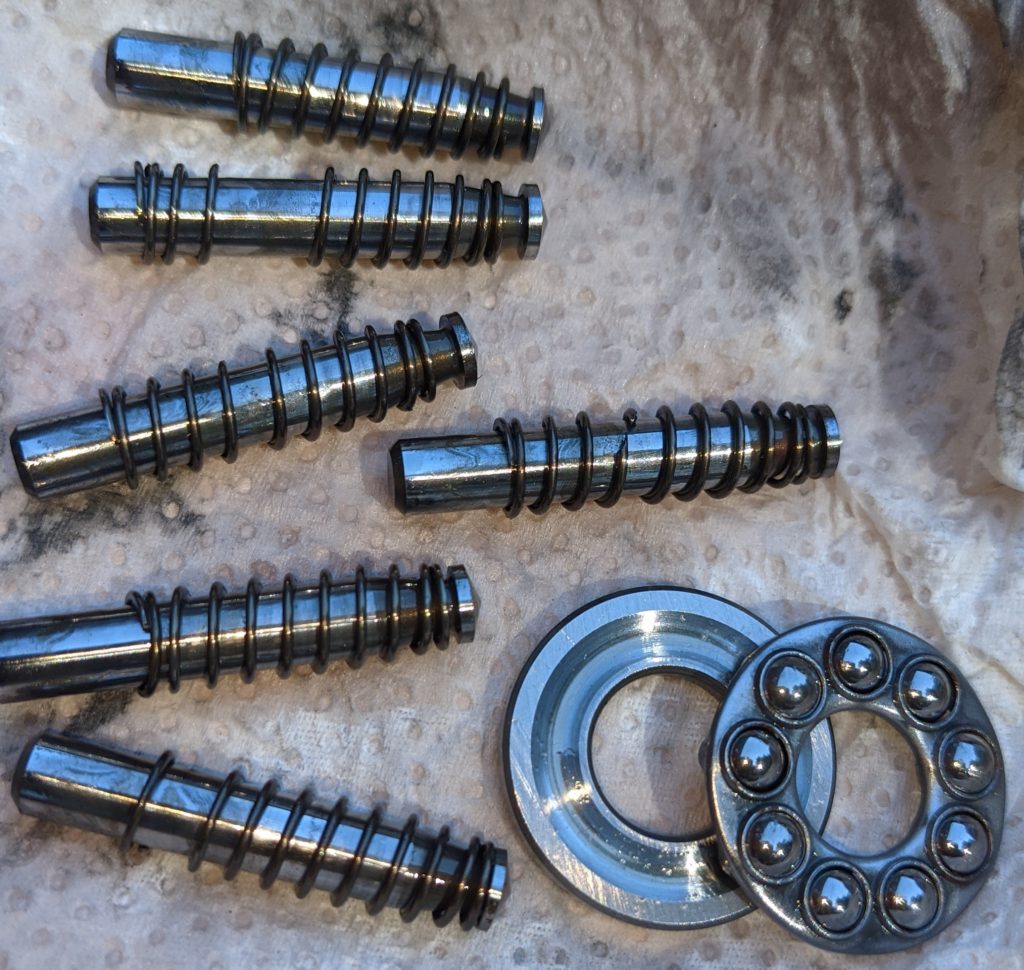
Springs graveyard …
Some repair work
Sunday I got around opening up the oil pump for the failed L&S tiller drive. I had been told that there may have been broken springs, and indeed there were! There are 6 pistons and a total of 5 had their springs broken. I replaced them all with new ones, filled the oil reservoir, and gave it a run. The motor would run but the clutch would not engage. I removed the clutch to see if there was anything going on. My untrained eye could not see anything wrong but now the clutch did engage. I put it all back together again, tested with my car’s battery, and this time it worked. It may be time to swap that clutch and keep it as a spare.
I am getting a little more comfortable with these repairs, which is good for when I’ll have to do them at sea.
The oil pump disassembled
The end of something
On a separate topic, I reached out to rogue rigging last weekend to inquire about cost estimates for some rigging work. The answer was that Ryan declined to work with me “based on past interactions”. Since his shop is at BMC, I reached out to Cree to see what his position was. Same same. So that’s the end of that. Maybe that’s for the best for both of us. But as I tried to wrap my head about this, considering that the Bay Area is small, I realize that people talk and there was even a rumor that I hadn’t paid my bills. The truth is that I, on multiple occasions, had to inquire about getting an invoice, which I finally received while I was at sea, and my wife paid it in full a few days after reception.
Sometimes, everybody has the best of intentions and things still go sideways. But the thing that got me is that I think this was likely out of people talking, not the BMC team actually reading my blog. And hence I’ve disabled notifications going forward, this post included.
There are only two persons I’m putting the time in to write these blogs, which are almost 100% transparent: myself (to get my ideas in order) and the next Philippe (who wants to go on wild adventures but has little experience). I will say that I’m very thankful for everyone’s support and comments. I’ve enjoyed the ride and I hope you did too. I think this move is also part of my going under the radar now, trying to take it easy away from the public’s eye.
I’ll still be blogging so feel free to visit from time to time.
Most of my sailing, since I returned from 5 weeks solo at sea, had been double-handed. So I’m glad to say that the “curse” has been lifted and that on father’s day Changabang and I went sailing.
As I was out there I was reminded that I really like Changabang. It feels like I have a particular connection to her. As if she is my “boat mama”. I’ve referred to her as the whale in the past and it’s a bit how I feel when I’m at the bow, looking astern, and we’re sailing downwind. It’s just a good feeling all around.
One of the key reasons to get out was to test out CaB’s A2. As you recall, Big, as this sail is known, was in tatters and had gone in for surgery at Leading Edge Sails. It took Joe a full day to do the surgery. It was not an easy job considering how many panels had been torn apart. But the final result is good and I now have an A2 again. It was also an opportunity to try our brand new ATN sock.
I’m happy to report that all went very well and we’re ready for a downwind run anytime! I didn’t hear the rudder humming this time so I’m anxious to get there soon.
Big is back in action! Don’t mind my rambling in the audio 🙂
I’ve received the replacement parts for the broken tiller pilot oil pump and I will need to get dirty to fix that soon!
Funds
I’ve come to the conclusion that I’m not likely going to be able to invest in new spinnakers, just like I wasn’t able to the first time around. Recall that the new A6 was funded by an OCC grant award. But if I get $2,000 (the cost to me for the A6) in donation, I can buy the sock it requires. So, if you feel so inclined, please consider a donation here. What can I offer in return? Your name on the sail for anything above $100! Wouldn’t that be great?
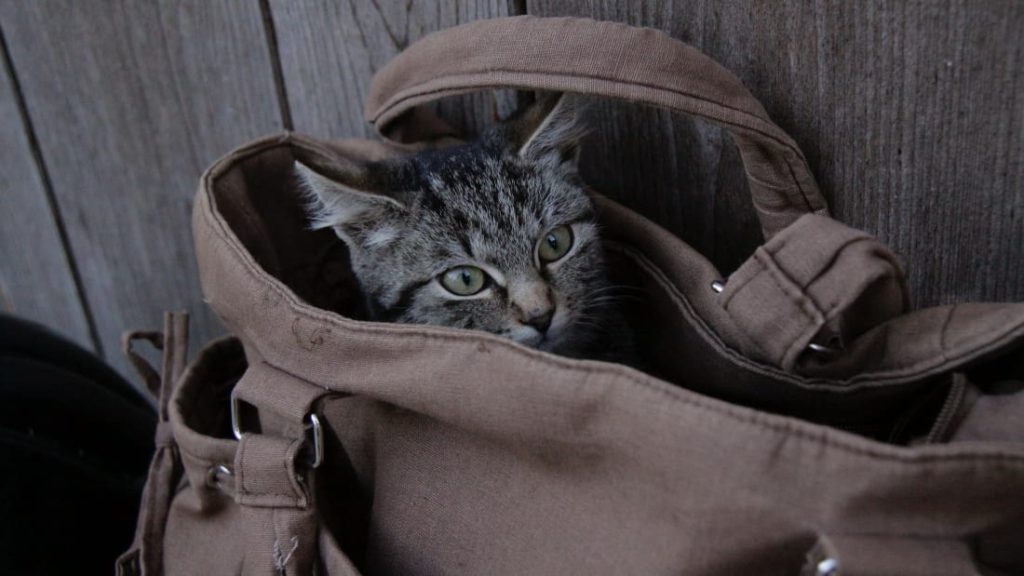
As the saying goes, the cat is out of the bag: I’m going to give it another go. My first attempt only lasted five weeks, which makes it a great shakedown cruise. As I look ahead to identify what I need to work on I’ll start with the mental preparation. As I’ve written before, a long-distance offshore solo sailor must have his head squarely screwed on his shoulders.
In the months leading to my departure last September, I picked up enough mental junk that I wasn’t as ready as I could have been. During the winter following my return, I did a lot of soul searching. I’m hoping to have reached a new level of understanding that will allow me to be more relaxed about my adventure. I don’t care anymore about getting across to the other side; all I care about is being out there. And I will do all in my power to secure that time at sea.
My first attempt highlighted some of the weaknesses of my preparation. I’m now exploring what I can do to fix these at a reasonable cost.
Shiny and precious!
Weakness #1: auto-pilots
On a fast boat like Changabang, the autopilot is essential. For my first attempt, I had 3 fully functional systems:
Primary: NKE electronics (wind vane, rudder sensor, compass, speedometer, wifi, computer, displays, etc.), L&S linear drive. I have no backup for NKE Electronics except for the rudder angle sensor.
Secondary: B&G electronics (rudder sensor, compass, depth, displays, computers, etc.), L&S linear drive. I have no backup for B&G electronics. I have a wind vane, which is not mounted.
Tertiary: Pelagic autopilot, which is self-contained. The Pelagic computer can be connected to the L&S linear drives as well.
A third L&S linear drive: this is an old and well-used (but still functional) piece of hardware.
A spare electric motor for the L&S drive.
Linear drive: damaged brushes of the electric motor of the oil pump
Although the above seems like a lot, it really isn’t. Recall that my primary auto-pilot solution failed after 12 days or so. I fixed it when I got back: replacing the carbon brushes was sufficient. This is an operation that can be done at sea.
Any time I need to take the linear drive auto-pilot out of commission I need to plan for a few hours to get the whole drive out of its small storage space outside and another few hours to get it back in. Add to that the troubleshooting and repair, and you’re looking at a full day’s job. This operation also requires spending a bit of time hanging off the stern. These Lecomble & Schmitt (L&S) are supposed to be very durable; it’s just that on Changabang they are not that well protected.
Not once but twice!
Then recall that the second linear drive recently gave up as well. So, during my lifetime with the boat, that’s one every 3,000 miles or so. Considering that the electric motor of the primary drive had to be replaced before I bought Changabang because it made weird noise, it’s a pattern. On a trip of 30,000 miles, we’re looking at 10 failures! Three backup plans are hardly enough. That’s not even counting the risks of the electronics failing.
There were also problems with the drive not disengaging when the auto-pilot was turned off (on both systems), presumably because the clutch was stuck (dirt?). This would be resolved by “light” hammering at the end of the piston rod.
So what to do?
I’ve not had the actuator (cylinder/rod) itself fail. But the pump failed once and the motor three times. I have 3 full systems. They are of different generations, each with slight variations of the hardware. I should be able to scavenge from one to fix the other. I also have one spare motor. So I think I’ll add the following to my arsenal:
8 spare brushes;
a maintenance kit.
That’s a lot of spare, which I won’t know what to do with if I don’t use them. But it’s an essential part of the backup plan.
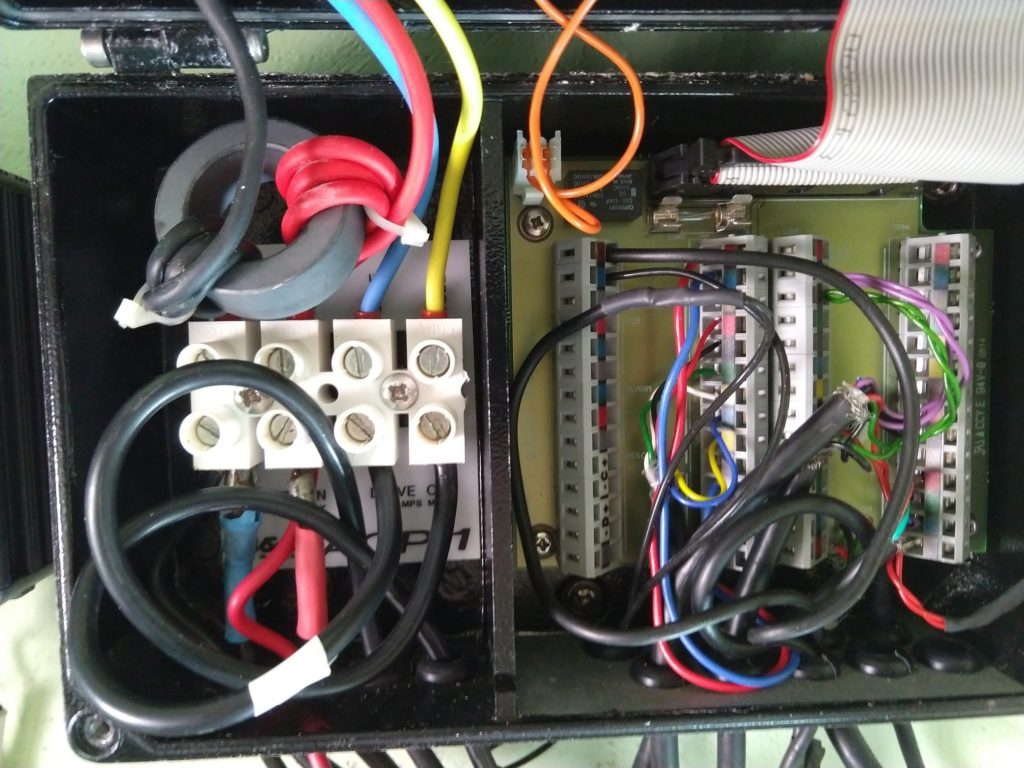
Inside the old B&G box: a messy tangle.
Weakness #2: electronics
Each component of the NKE or the B&G electronics system is a single point of failure. Some of these are exposed to the elements. The wind vane at the top of the mast and the rudder sensor, in particular, are very much at risk. In summary, if any component of the NKE, B&G, or Pelagic systems fails, the whole system fails. I have not had a failure of either, yet. But still, I need to beef up the spare and backup plans in this area.
To function properly, the NKE system requires the rudder angle sensor, the compass or the windvane, the computer, the voltage regulator, and a bunch of bus boxes. The B&G system is several generations behind and no spare parts are available, except maybe for the rare item on eBay. The NKE system is fairly recent so spare parts can be purchased but their cost is so high!
There are other options to consider. In particular, I could get several Pelagic auto-pilots as “consumables”. I’d just need to make sure that I have a solid solution for the tiller connection (I don’t today), or use it to control the L&S drives.
In the final analysis, I feel like acquiring a second spare NKE rudder angle sensor, a basic NKE compass, and another Pelagic pilot.
I started a new job 5 weeks ago. It’s been very intense. Days start early and end late. Since there is a lot of work to do and I like to do a good job most of my energy is spent re-organizing a small team of engineers. I have not yet fleshed out a solid plan for a second attempt at sailing around Earth. Instead, I am doing small (tiny) jobs on Changabang and sailing once every 3 weeks or so. Things could be better.
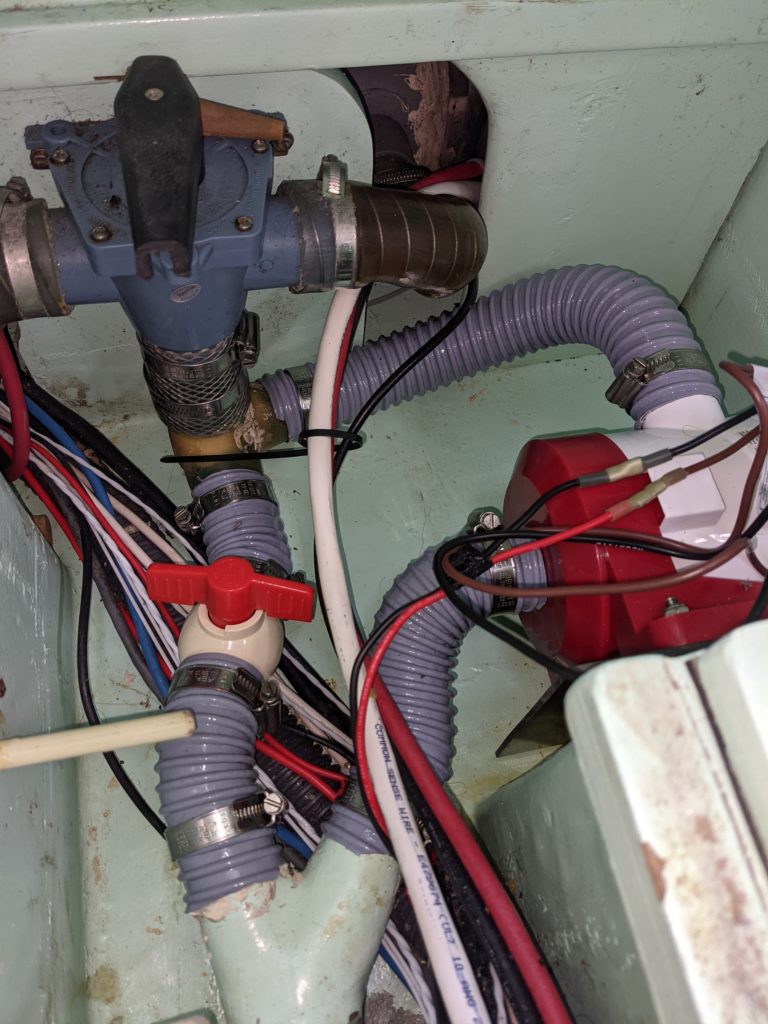
A new pump, new valve and new pipes.
Water ballast system
I have made good progress fixing up the water ballast system. The old pump was not rated for saltwater and I replaced it with a Rule 17 livewell pump. It is very much the typical boat project. Attaching the pump in the small space it’s located required retro-fitting a mounting bracket on the previous mounting bracket. The new pump draws 25 Amp, which was tripping the old circuit breaker. I had to upgrade the breaker, install the new 25 Amp breaker on the fuse panel, and re-wire things a bit. Next, I’ll try to fix the leaks in the plumbing. Oh, and the joint in the scoop, which was replaced in August, leaks again after holding tight for a while. I can’t wait to be able to sail the water ballasts without leaks!
Other repairs
The secondary auto-pilot failed recently. After a bit of troubleshooting and conversing with L&S France, it looks like some pistons (on springs) in the oil pump may be broken. I’ll have to order new ones and try a repair.
I replaced the staysail halyard, repaired the zipper on the mainsail cover. Joe of Leading Edge Sails repaired Big (the A2). Considering the damage I did to the sail, we’re not 100% sure the repair will work well so I will try it as soon as I receive … the new ATN spinnaker sock. Etienne is very supportive and his products are excellent!
I climbed the mast to install retainer bungee cords on the running backstays (one of them had been torn apart). Then a diver replaced the sail drive anode (which apparently was gone, dropped due to vibrations maybe). And I dove to do a bit of bottom cleaning (a real cleaning is due as I can feel rugged growth on CaB’s bottom).
I’m trying to get a marine mechanic to visit Changabang for an engine maintenance. I will have to drive to Ventura to collect a J-125 emergency rudder and then think about how to install it on CaB’s “sugar scoop” stern.
It looks like the boom repair is holding up. It hasn’t been tested (which is how it should be, none really wants to accidentally gybe!).
I think that’s all I can recall for now. Other than the above, I’m writing an article for the Ocean Cruising Club.
It looks like I’m overdue for an update. After my first attempt at sailing around Earth, I engaged in a flurry of activities of unloading and fixing Changabang. After that, well, I can honestly say that I went into hibernation mode. I didn’t sail for about 4 months. Maybe with spring, things are getting better: Changabang finally went out of her slip in Pillar Point Harbor for a few times lately. I have been sailing with fellow singlehander Todd, whose desire for more ocean sailing was a bit of a catalyst for my getting back on the water.
Some lessons learned, as usual
Nothing exceptional happened. We did get a chance to try out the older spinnaker (blown out) I inherited from Class 40 California Condor. It does fit CaB and somewhat feels more like a reaching spinnaker than Big, which went into repair last week. We also tried the Code 0 I inherited from California Condor, which proved a nice sail for 50-80 AWA. And finally, we popped out the very heavy Jib Top (also from Condor), which works well for 90-120 AWA. It’s certainly slower than a spinnaker but it’s a very sturdy sail on a furler, making its deployment and dousing easier.
What else is new?
Well, the list of things to fix and/or maintain is growing, of course. And, I am starting a new job next Monday, which is quite exciting! I think the new job is going to be a lot of fun and will help float up the budget.
I reflected recently that a lot of Class 40 attempts to circumnavigate non-stop often fail. But I am not aware of any re-start. It looks like the time and budget investment is too much for most to re-start their attempt. I sincerely hope that I won’t fall in the same category.